
Quick Answer
BPH is a non-cancerous enlargement of the prostate common in men over 40-50, pressing on the urethra and causing frequent urination, weak flow, and incomplete emptying. Aaravya Hospital treats it with medicines, minimally invasive procedures, TURP or laser prostate surgery for severe cases, and management of related complications like retention or infection.
At Aaravya Hospital, we offer advanced and effective treatment for Benign Prostatic Hyperplasia (BPH) using both medical and minimally invasive surgical options. Our experienced urologists focus on relieving urinary symptoms, improving bladder function, and enhancing overall quality of life for men suffering from enlarged prostate.
BPH is a non-cancerous enlargement of the prostate gland commonly seen in men above 40–50 years of age. As the prostate enlarges, it presses against the urethra (urine passage) and bladder, causing difficulty in urination and other urinary problems. While it is not cancer, untreated BPH can lead to urinary retention, infections, and kidney damage.
Age-related hormonal changes in men; family history of prostate problems; obesity and sedentary lifestyle; diabetes, high blood pressure, or heart disease; smoking and excessive alcohol intake.
1. Medical Management (Medicines)
For mild to moderate symptoms: medications to relax the prostate and bladder muscles (alpha-blockers), medicines to reduce the size of the prostate (5-alpha reductase inhibitors), and supportive treatment for associated symptoms (like burning, infection, etc.).
2. Minimally Invasive Procedures
In patients who do not respond well to medicines or have moderate symptoms, minimally invasive options may be advised. These procedures reduce prostate size or open the urine passage with less pain, minimal blood loss, and faster recovery.
3. Surgical Treatment (TURP / Laser Prostate Surgery)
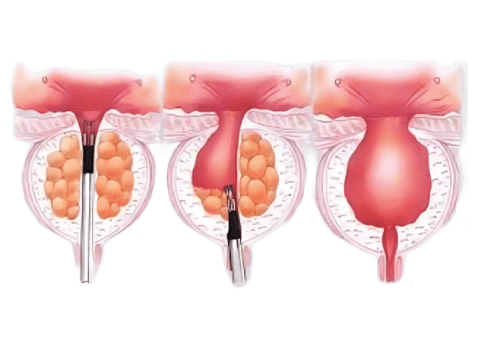
For severe BPH, large prostate size, or complications like recurrent urinary retention, surgery is recommended: TURP (Transurethral Resection of Prostate) is a standard procedure where excess prostate tissue is removed through the urethra using an endoscopic instrument; Laser Prostate Surgery uses advanced laser techniques to remove or vaporize enlarged prostate tissue with minimal bleeding and quicker recovery.
Procedure details4. Management of Complications
In cases with urinary retention, bladder stones, recurrent infections, or kidney involvement, additional treatment is given to protect overall urinary health.
What is BPH and how is it managed?
Benign Prostatic Hyperplasia (BPH) is prostate gland enlargement that causes urinary issues in men. Treatment involves medications or minimally invasive procedures like TURP (Transurethral Resection of the Prostate) or laser prostate surgery.
If you are facing difficulty in urination or frequent night-time urination, don’t ignore the symptoms. Early evaluation and timely treatment of BPH can prevent complications and greatly improve your comfort and quality of life. Visit Aaravya Hospital for expert consultation and comprehensive treatment of BPH (Benign Prostatic Hyperplasia) in Ahmedabad. Our dedicated team is committed to providing safe, effective, and long-lasting relief from prostate-related problems.